T‑Mobile
Savings Calculator
An interactive comparison tool that became a fixture of T‑Mobile's national TV campaigns.
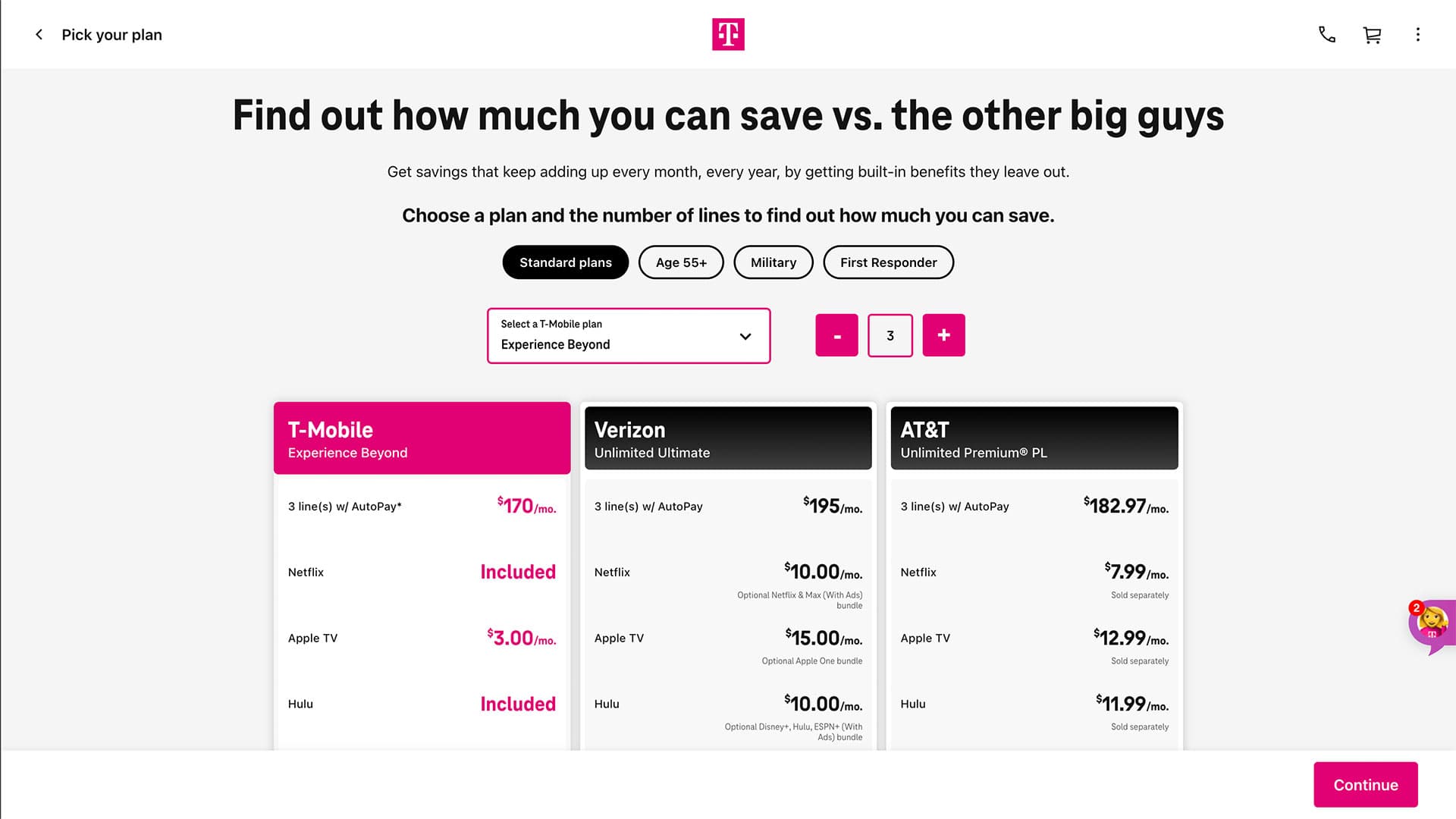
Screens and video captured at an earlier date. Pricing and plan details shown are a historical sample and don't reflect current offers.
The Problem
In late 2022, T‑Mobile had a simple comparison chart showing pricing differences between carriers. It worked, but it was static... essentially a snapshot that went stale every time plans changed. When a new value campaign launched in mid-2023, there was a chance to turn that chart into an interactive tool that made the case for T‑Mobile as the value leader.
The real challenge: building something that could evolve. It started as a line selector, became a benefits comparison, and eventually turned into a full calculator that computed savings percentages and dollar amounts... all while staying accurate, legally compliant, and simple enough for anyone to use.
The Approach
There was no grand plan. The tool started in market and each version was shaped by how people used the last one: what they clicked, where they dropped off, and what questions they still had.
The tool went through multiple phases: first a line selector and basic comparison view, then a benefits comparison showing what's included at T‑Mobile versus what competitors charge extra for, and eventually a full calculator that computes savings percentages and dollar amounts based on a prospect's current plan.
Because it compares plans across carriers, every claim went through legal review before it shipped, and the plan data was structured so it could be updated quickly whenever plans changed.
The tool had to live inside T‑Mobile's CMS (Adobe Experience Manager) without custom platform work, so it was built from scratch with HTML, CSS, and Vanilla JS.
Over time it grew past a single module. It's now a dynamic placement that breaks down the full value of a plan (benefits, perks, pricing) and lives on the How to Switch page, the Plans page, and across multiple ad campaigns in rotation. It's also been featured in nationally broadcast TV spots, including commercials with the Suits cast and Snoop Dogg.
I was the lead designer, lead developer, and eventually the de facto product owner, shaping where the tool went next as it grew.
The Result
What started as a static chart is now a recurring placement across T‑Mobile.com: the How to Switch page, the Plans page, and rotating ad campaigns.
It's been featured in nationally broadcast TV spots, including commercials with the Suits cast and Snoop Dogg, which is rare territory for a web module.
Video Demo
Screens and video captured at an earlier date. Pricing and plan details shown are a historical sample and don't reflect current offers.
The Details
Tech Stack
Key Challenges
- Keeping competitive comparisons accurate and legally reviewed as plans changed.
- Building within AEM without custom platform work, with everything handwritten in HTML/CSS/JS.
- Evolving the tool through multiple iterations while keeping it live and accurate in market.
- Growing a simple comparison chart into a full interactive product with its own roadmap.
Live Project
www.t-mobile.com/cell-phone-plans→Work shown was created in my role at T‑Mobile. T‑Mobile is a trademark of T‑Mobile USA, Inc. This site isn't affiliated with or endorsed by T‑Mobile.
More Work

Friday Night 5G Lights
2,000+ schools, 8M+ votes, $1M+ grand prize.
Super Bowl Landing Page
Custom execution for T‑Mobile's biggest digital moment of the year.

GameShuffle
A game-night platform for streamers, friend groups and Discord communities, built solo from database to overlay.